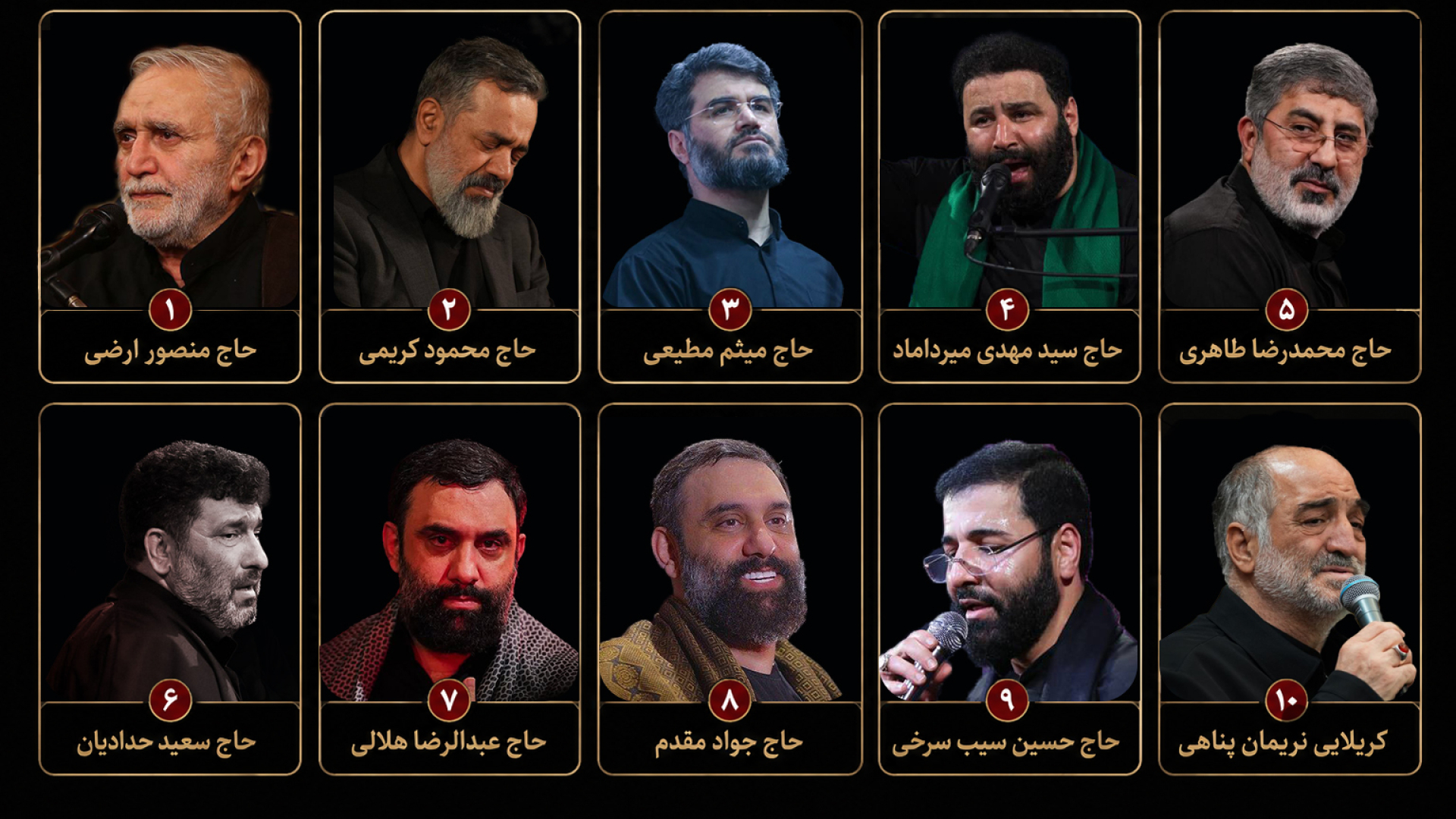
Ten of the Most Famous Maddahs of Iran
The ten most famous Maddahs of Iran hold a special place in Persian religious culture because they transform poetry, lamentation, and collective memory into a shared devotional experience. Readers searching for an introduction to famous Maddahs of Iran, Iranian Maddah traditions, and Persian religious eulogy will find that this subject is about far more than recognizable voices. Maddahi is a disciplined art of delivery, timing, breath control, textual selection, and audience awareness. A Maddah must know classical Persian poetry, local dialects, Arabic phrases, Quranic allusions, and the emotional grammar of grief and hope. The most recognized names in Iranian Maddahi have built reputations through decades of live recitation, recorded sessions, mosque programs, and media appearances. This article profiles ten figures often cited in discussions of famous Iranian Maddahs, while noting that art is not a scoreboard and that regional audiences may champion different voices. The aim is to explain the cultural context, performance style, and public role of these reciters rather than to issue a final ranking. The list includes Mahmoud Karimi, Mohammad Reza Taheri, Saeed Haddadian, Mehdi Salahshour, Ali Fani, Hossein Sib Sorkhi, Mohammad Reza Helali, Morteza Sadeghi, Mohammad Reza Aghajani, and Karim Mansouri. Each name represents a different chapter in the story of Iranian religious eulogy, and together they show how Maddahi connects devotion, literature, memory, and community life. The article also explains how famous Iranian Maddahs are recognized, what distinguishes a skilled reciter from a merely popular one, and why the ethical framework of Maddahi matters as much as vocal ability. By the end, readers should understand why these ten names appear so often in conversations about Persian religious eulogy and how the tradition continues to evolve without losing its spiritual center.
What Is a Maddah in Iranian Culture?
A Maddah is a reciter of religious eulogy, praise, and lamentation, usually performing in Persian with occasional Arabic phrases and poetic allusions. The role is especially visible during Muharram, when communities gather to remember Imam Hossein and the events of Karbala, but Maddahi also appears in Ramadan nights, Fatimiyyah observances, mourning ceremonies, and special religious celebrations. The Maddah may lead a congregation through grief, reflection, and resolve, using a voice that can shift from restrained narration to intense lamentation. In Iranian culture, the best Maddahs are not merely vocalists; they are storytellers who understand audience psychology, ritual timing, and the limits of emotional expression. They often work with poets, composers, mosque organizers, and sound teams, and their performances may be transmitted through recordings and social media long after the original gathering. The art requires years of practice, because a Maddah must protect the voice, control pitch, manage long melodic phrases, and keep the text intelligible. The most famous Iranian Maddahs are respected for combining technical skill with humility, since the purpose of Maddahi is not personal fame but communal remembrance and spiritual attention. A good reciter knows when to pause, when to let the congregation breathe, and when to return to the text so that emotion does not overwhelm meaning. This balance is what separates a memorable Maddah from a passing performer.
How Famous Iranian Maddahs Are Recognized
Recognition in Maddahi comes from several directions at once. Live audiences value a reciter who can hold a room with clear diction, emotional restraint, and a well-timed climax. Recorded works spread reputations beyond local communities, especially when a recitation becomes associated with a particular mourning season or a specific poem. Peer respect also matters, because experienced Maddahs are often admired for their knowledge of Persian literature, their ability to improvise within tradition, and their awareness of religious boundaries. Media visibility can amplify a name, but the most durable reputations usually rest on consistent service in mosques, religious centers, and community gatherings. Regional style is another factor, since audiences in different cities may prefer different accents, tempos, and poetic repertoires. This list of famous Maddahs of Iran therefore reflects broad public recognition rather than a formal vote. Some readers may know additional names, and that is a healthy sign of a living tradition. The ten figures discussed here are often mentioned together because they represent major strands of Iranian Maddahi: classical lamentation, modern devotional recitation, youth-oriented performance, and community-centered mourning leadership. Their reputations also show how Iranian Maddahs move between local trust and national visibility, between the mosque pulpit and the recorded archive, and between inherited poetry and contemporary delivery.
Ten Notable Maddahs of Iran
Mahmoud Karimi
Mahmoud Karimi is widely regarded as one of the most respected voices in Iranian Maddahi, known for precise Persian diction, classical mourning recitation, and a measured emotional style. His performances often emphasize textual clarity and spiritual gravity, which makes him a reference point for listeners who value traditional lamentation. He is frequently cited among the most famous Maddahs of Iran because his work bridges older religious recitation styles and modern recording culture. His voice is associated with Muharram gatherings, where long poetic passages require both stamina and restraint. For many audiences, Karimi represents the disciplined side of Maddahi: the reciter as a careful interpreter of poetry rather than a performer chasing easy sentiment. His influence is visible in the way younger reciters study his phrasing, his respect for the text, and his ability to keep a large gathering attentive without relying on excess. When people discuss famous Iranian Maddahs, Karimi is often named first because his style illustrates the classical ideal of Maddahi as service, literature, and controlled devotion.
Mohammad Reza Taheri
Mohammad Reza Taheri is another prominent Iranian Maddah whose name appears often in discussions of religious eulogy. He is recognized for a warm vocal presence and an ability to connect with large mourning assemblies. His recitations tend to balance narration, praise, and lamentation, allowing the audience to follow the story before entering the emotional high points. Taheri's reputation illustrates how Maddahi combines ritual leadership with public communication. Audiences appreciate reciters who can make a familiar story feel immediate without distorting its religious meaning, and his work is often discussed in that context. His inclusion here reflects his broad visibility among Iranian religious audiences and his role in sustaining traditional Maddahi across generations. He represents a style in which the Maddah speaks clearly to the congregation, respects the rhythm of the ceremony, and uses emotional intensity as a tool for remembrance rather than as a spectacle. That approach has helped him remain a familiar name among listeners who value both tradition and accessibility in Persian religious eulogy.
Saeed Haddadian
Saeed Haddadian is frequently named among famous Iranian Maddahs, especially for his presence in Muharram programs and religious ceremonies in Tehran and beyond. He is known for a direct, community-oriented style that places emphasis on audience participation and collective mourning. His recitations often combine eulogy with moral reflection, reminding listeners that remembrance should lead to ethical awareness. Haddadian represents the organizer-reciter model, in which the Maddah is also a community figure who helps coordinate religious gatherings. His visibility has made him a familiar voice in Iranian devotional culture, and his name is often mentioned when readers ask about influential Maddahs of Iran. His style is not only about vocal performance but also about creating a space where mourners feel included, where the poetry reaches ordinary listeners, and where the ceremony maintains its purpose. This community-centered reputation explains why he appears in many informal lists of famous Iranian Maddahs.
Mehdi Salahshour
Mehdi Salahshour is a well-known Iranian Maddah associated with modern religious recitation and widespread public recognition. His style often blends emotional intensity with clear storytelling, and he has become familiar to audiences through live programs and recorded works. In discussions of famous Iranian Maddahs, Salahshour is often cited for his ability to communicate with younger listeners while staying within the framework of traditional mourning. His performances show how Maddahi adapts to changing media environments without abandoning its ritual purpose. He represents a contemporary strand of Iranian religious eulogy in which the reciter speaks to both a physical congregation and a wider recorded audience. That dual audience requires a special kind of discipline, because a phrase that works in a crowded mosque may sound different through a speaker or a phone screen. Salahshour's recognition reflects the growing importance of media presence in Iranian Maddahi, but it also shows that popularity still depends on the ability to deliver sincere, intelligible, and religiously appropriate recitation.
Ali Fani
Ali Fani is among the most recognizable names in contemporary Iranian Maddahi. He is known for a powerful vocal style, devotional poetry, and performances that move between praise and lamentation. His work has circulated widely through recordings and online platforms, helping him reach audiences beyond the mosques where Maddahi is traditionally performed. Fani's popularity illustrates the modern dynamics of famous Iranian Maddahs: a reciter can become known through media while still serving religious gatherings. Listeners often value his ability to sustain melodic intensity and to deliver long poetic passages with emotional clarity. His name is frequently included in lists of influential Iranian Maddahs because of his broad reach and distinctive recitation style. At the same time, his work raises important questions about how Maddahi should be presented online, since devotional recitation requires context, respect, and a clear separation between religious service and entertainment. Fani represents the contemporary visibility of Iranian Maddahi and the way a single voice can travel across communities through recorded media.
Hossein Sib Sorkhi
Hossein Sib Sorkhi is a respected Iranian Maddah whose name is familiar to many religious audiences. He is often associated with heartfelt lamentation and a style that emphasizes direct connection with the congregation. His recitations can move quickly from calm narration to intense mourning, a pattern that reflects the ritual rhythm of Muharram gatherings. Sib Sorkhi represents the importance of local trust in Maddahi, because a reciter's reputation is built through repeated service to communities. His inclusion among famous Maddahs of Iran reflects his visibility in devotional circles and his contribution to the emotional vocabulary of Iranian religious eulogy. Audiences who follow Iranian Maddahs often value reciters who can express grief without losing control of the text, and Sib Sorkhi's style is discussed in that light. He represents a strand of Maddahi in which the reciter is close to the people, knows their mourning customs, and understands how to guide a gathering from quiet attention to collective lamentation.
Mohammad Reza Helali
Mohammad Reza Helali is another figure often mentioned in discussions of Iranian Maddahi. He is recognized for religious recitation that combines poetic sensibility with a clear devotional purpose. His style reflects the close relationship between Maddahi and Persian religious poetry, where metaphor, mourning, and praise are woven together. Audiences who follow Iranian Maddahs appreciate reciters who can make classical images feel accessible without losing their depth. Helali's presence on this list reflects his recognition among religious listeners and his place in the broader landscape of Persian eulogy. His work contributes to the continuity of Maddahi as a literary and spiritual practice, and it reminds listeners that the reciter is also a transmitter of poetry. When a Maddah chooses a poem, changes a phrase, or pauses before a key line, the audience receives both sound and meaning. Helali represents that literary dimension of Iranian Maddahi, in which the beauty of the language serves the purpose of remembrance rather than distracting from it.
Morteza Sadeghi
Morteza Sadeghi is a name that appears in conversations about notable Iranian Maddahs, particularly among audiences who value traditional mourning styles. He is associated with religious recitation that emphasizes textual meaning and controlled emotional delivery. In Maddahi, restraint can be as powerful as intensity, because the reciter must know when to let the words carry the grief. Sadeghi represents that careful approach, in which the Maddah protects the dignity of the ceremony and avoids turning mourning into mere performance. His name is included among famous Iranian Maddahs because he reflects the enduring value of classical recitation in a media-driven age. Listeners who prefer depth over display often point to reciters like Sadeghi as examples of how Maddahi can remain spiritually serious while still touching the heart. His work shows that a strong Maddah does not need constant volume; clarity, sincerity, and respect for the text can create a lasting impression.
Mohammad Reza Aghajani
Mohammad Reza Aghajani is often cited among Iranian Maddahs who have built a reputation through religious ceremonies and devotional recitation. His style is associated with emotional delivery, attention to audience response, and a close connection to the rhythms of Muharram gatherings. Aghajani represents the live dimension of Maddahi, where the reciter reads the room, adjusts the pace, and responds to the congregation's need for both reflection and lamentation. His inclusion in this list reflects his recognition among listeners who follow Iranian religious eulogy and appreciate reciters who can sustain a long program with focus and consistency. In Maddahi, the relationship between the reciter and the audience is not passive. The congregation's responses, silences, and movements shape the performance, and a skilled Maddah learns to work with that energy. Aghajani's name appears in discussions of famous Iranian Maddahs because he represents that interactive tradition, where the voice of one reciter becomes the voice of a community in mourning.
Karim Mansouri
Karim Mansouri is a respected name in Iranian Maddahi and is often mentioned among reciters who serve religious communities with dedication. His work reflects the local roots of Maddahi, where a reciter becomes known through years of participation in mourning ceremonies, mosque programs, and religious gatherings. Mansouri represents the many Maddahs whose reputations are built through steady service rather than media hype. His inclusion among famous Iranian Maddahs acknowledges that recognition in this field is not only about national fame but also about trust within religious communities. Listeners value reciters who are consistent, respectful, and capable of guiding a ceremony without distracting from its purpose. Mansouri's place in this list reminds readers that Iranian Maddahi is a broad tradition with many centers of influence. Some reciters are known through recordings, while others are known through decades of presence in a particular city or neighborhood. Both forms of recognition matter, and both contribute to the living culture of Persian religious eulogy.
The Ethical Responsibilities of a Maddah
The ethical responsibilities of a Maddah are central to the tradition and cannot be separated from vocal skill. A Maddah speaks in a religious setting where listeners are emotionally open, spiritually attentive, and often grieving. That trust requires humility, accurate narration, and respect for religious authorities and scholarly boundaries. The reciter should not invent stories, distort historical accounts, or use mourning as a tool for personal promotion. Maddahi is not a platform for settling scores, spreading rumors, or manipulating emotion for attention. The best-known Iranian Maddahs are careful about what they say, how they say it, and when silence is more appropriate than speech. They understand that a single phrase can comfort a mourner or cause confusion, and they treat the pulpit as a responsibility rather than a stage. This ethical framework also applies to recorded content, because a recitation uploaded online may reach listeners without the context of a religious gathering. A responsible Maddah ensures that recordings are presented respectfully and that the focus remains on remembrance, learning, and spiritual reflection. When famous Iranian Maddahs are discussed, their ethical conduct is often part of the conversation, because technical ability without responsibility does not earn lasting respect.
Maddahi During Muharram and Ramadan
Maddahi during Muharram has a distinctive rhythm that differs from other religious seasons. The first days often emphasize narration, historical context, and the virtues of Imam Hossein and his companions. As the month progresses, the tone may become more sorrowful, and the reciter may move into longer lamentation. The Maddah must understand this progression and avoid starting at maximum intensity too early. A well-planned Muharram program allows the congregation to move through reflection, grief, and resolve without emotional exhaustion. Ramadan offers a different context, with nights of prayer, Quranic recitation, and devotional poetry. Maddahi in Ramadan may focus on praise, supplication, and moral reflection rather than the intense mourning associated with Muharram. The same reciter may perform in both seasons, but the style must adapt to the occasion. Famous Iranian Maddahs are often admired for their ability to match the season, the audience, and the purpose of the gathering. This adaptability is a sign of experience, because a Maddah who uses the same emotional pattern everywhere misses the specific meaning of each religious occasion.
Regional Styles and Local Audiences
Iranian Maddahi is not a single uniform style. Regional accents, local poetry, and community customs shape the way recitation sounds and feels. Audiences in different cities may prefer slower tempos, particular melodic patterns, or specific poets whose work is well known in their area. A reciter who is famous in one region may be less known in another, even if their skill is widely respected. This regional diversity is one of the strengths of Persian religious eulogy. It prevents Maddahi from becoming a single commercial format and keeps local memory alive. The ten famous Maddahs of Iran discussed here represent a mix of national visibility and community recognition. Some are known primarily through recordings and media, while others are known through live service in mosques and religious centers. Readers should therefore treat any list of famous Iranian Maddahs as an invitation to explore further. Local audiences often hold deep knowledge about reciters who rarely appear on national platforms, and those voices are part of the tradition as well. A healthy appreciation of Maddahi includes respect for both prominent names and local reciters who serve quietly.
Digital Media and the New Visibility of Maddahs
Digital media has changed the way famous Iranian Maddahs become known. A recitation recorded on a phone can reach thousands of listeners in a short time, and a single Muharram program may circulate across multiple platforms. This visibility can help talented reciters find a wider audience, but it also creates pressure to produce content that attracts attention. The challenge is to use media without letting it reshape Maddahi into entertainment. A responsible reciter keeps the religious purpose clear, avoids sensational editing, and ensures that recordings do not reduce a sacred gathering to a viral clip. Audiences also have a role, because they choose what to share and how to comment. When listeners discuss famous Iranian Maddahs online, they should remember that the reciter is a religious figure, not a celebrity to be consumed. The best digital use of Maddahi preserves context, credits poets and organizers, and directs attention toward the meaning of the occasion. In this sense, media can serve the tradition if it is guided by respect rather than novelty. The most durable reputations among Iranian Maddahs are still built on live service, even when digital platforms amplify their reach.
How to Explore Iranian Maddahi Further
Readers who want to explore Iranian Maddahi further can begin by listening to complete ceremonies rather than short clips. Full programs reveal how a Maddah builds a narrative, manages emotion, and interacts with the congregation. It is also useful to read the Persian poetry that reciters use, because Maddahi is deeply connected to literary tradition. Learning about Muharram history and the ethics of mourning will help listeners understand why certain styles are respected. Comparing different reciters is natural, but the goal should be appreciation rather than ranking. Each Maddah brings a particular voice, background, and community relationship to the tradition. The ten names in this article are a starting point for understanding famous Iranian Maddahs, not a final list. Audiences can also explore regional reciters, local mosque programs, and recorded archives that preserve older styles. The more listeners learn about the context, the more they will recognize the skill involved in Maddahi. What may sound simple to an untrained ear is often the result of years of practice, textual knowledge, and emotional discipline. That is why Persian religious eulogy continues to attract devoted audiences and why the most famous Maddahs of Iran are treated with respect across generations.
Conclusion: Why These Ten Maddahs Matter
The ten famous Maddahs of Iran discussed in this article matter because they represent different dimensions of a living tradition. Some are associated with classical restraint, others with community leadership, and others with the modern reach of recorded devotion. Together they show that Iranian Maddahi is not a single style but a broad cultural practice shaped by poetry, ritual, regional identity, and ethical responsibility. Mahmoud Karimi, Mohammad Reza Taheri, Saeed Haddadian, Mehdi Salahshour, Ali Fani, Hossein Sib Sorkhi, Mohammad Reza Helali, Morteza Sadeghi, Mohammad Reza Aghajani, and Karim Mansouri each contribute to the public memory of Persian religious eulogy. Their names are often mentioned by listeners who value both emotional sincerity and respect for tradition. At the same time, any list of famous Iranian Maddahs should remain open to local voices and future reciters. The tradition continues because new generations learn from older masters, adapt to new media, and keep the central purpose of Maddahi alive. That purpose is remembrance, reflection, and communal devotion. When readers search for information about famous Maddahs of Iran, they are not only looking for names; they are exploring a culture of grief, poetry, and faith. This article has aimed to provide that context with clarity, respect, and attention to the enduring role of the Iranian Maddah.